
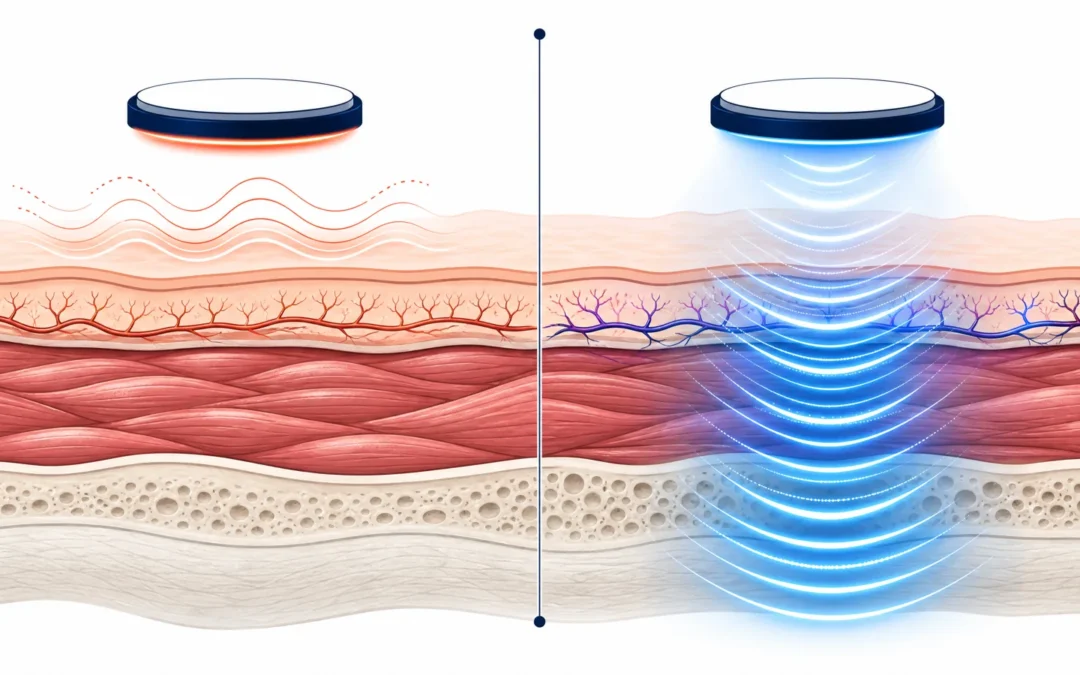
Key takeaway: A BEMER mat is one type of PEMF system, not the entire category. It uses a low-intensity, structured signal with a stated focus on microcirculation. The better question is not “Which brand wins?” It is whether the device’s controls, applicators, price, warranty, and support fit the way you actually plan to use it.
If you have been researching PEMF for more than a few minutes, you have probably run into BEMER. It is one of the better-known names in the space. That visibility is useful, but it can also make the comparison harder than it needs to be. A familiar brand name is not a shortcut to knowing whether a device is right for your home, practice, training room, or horse barn.
At ElectroMeds, we do not think people need more hype. You need a way to compare the systems in front of you without being talked down to or pushed into a decision. This guide is written for that purpose.
What BEMER Is Designed Around
BEMER describes its system as a low-intensity pulsed electromagnetic field intended to support microcirculation and vasomotion. Its public materials describe an eight-minute session and a patented signal structure. A published preliminary study describes a BEMER device with ten intensity levels ranging from 0 to 35 microtesla and a 30 Hz pulse frequency.[1]
That tells you something important. BEMER is a specific product philosophy. It is designed around a standardized routine and a defined signal, rather than giving the user a large menu of parameters to explore. For some people, that simplicity is exactly the appeal. They want a repeatable routine and do not want to learn a controller.
It is also fair to say that the available clinical literature should be read carefully. For example, the study cited above involved a small group and used BEMER alongside other care. Its authors described the work as preliminary and called for more evidence before treating it as a stand-alone answer.[1] That is how responsible device research should be read: useful, interesting, and bounded by what the study actually tested.
Why “BEMER vs. PEMF” Is Not a Simple Comparison
PEMF is a category of technology, not a single product or treatment protocol. Systems can differ in field strength, waveform, frequency choices, applicators, session controls, power source, portability, price, and service model. Two devices can both be called PEMF and still feel completely different to own.
That matters because buyers often begin with a health concern and then get handed a technical argument. The order should be reversed. Start with how you want to use a device. Then compare the technical features that support that use.
| Question to ask | Why it matters | What to look for |
|---|---|---|
| Do you want a simple fixed routine or more user control? | Controls determine how much you can adjust the experience. | Preset-only operation versus adjustable programs and settings. |
| Will you use a full-body mat, a targeted applicator, or both? | The physical format affects where and how a system fits into your routine. | Mat size, pillows, coils, loops, and available accessories. |
| Does the device need to travel? | A system that stays in a closet does not help anyone. | Battery operation, case size, weight, and charging requirements. |
| Who answers when you have a question? | Long-term support is part of the purchase, especially for higher-priced systems. | A reachable seller, warranty terms, setup help, and honest pre-sale guidance. |
| What is the real delivered price? | The purchase should make sense without vague promises or pressure. | Device, necessary accessories, warranty, shipping, and return terms. |
Comparing Intensity Without Turning It Into a Contest
Intensity is commonly expressed in gauss or microtesla. It is one useful specification, but it is not a universal scorecard. More intensity does not automatically mean a better fit, and a lower-intensity device is not automatically a poor product. It tells you what range of field a device is designed to deliver. It does not tell you whether you will find the session format comfortable, whether the applicator suits your goals, or whether you will actually use it consistently.
The practical comparison is straightforward. BEMER’s published design is low-intensity and standardized. Other systems, including systems ElectroMeds carries, offer different combinations of adjustable controls and targeted or full-body applicators. If adjustability matters to you, ask for the exact current specifications and a walkthrough of the controls before you purchase. If simplicity matters more, a preset-based routine may be more appealing.
Good sellers should be able to explain those distinctions without pretending a number alone settles the question.
Session Design and Everyday Use
The biggest difference between systems is often what life looks like after the box arrives.
Some buyers want a device that is almost automatic. They prefer a short, repeatable session and a familiar setup. Others want options: different formats, targeted accessories, a portable controller, or settings they can change over time. Neither preference is wrong. The problem starts when a person buys a rigid system and later realizes they wanted flexibility, or buys a complicated system when they wanted something simple.
ElectroMeds carries several systems that occupy different parts of that range. The StemPulse is a compact entry point for people who want a portable system. The MultiPulse adds a smaller wearable format and more program options. The Sedona Pro complete set is a full-body system for people who want a mat-and-pillow configuration. The MegaPulse range is for buyers comparing higher-output and professional-oriented equipment.
Those links are not a substitute for personal medical advice. They are a place to see the actual system format, current price, and available accessories. If you want to see every current option in one place, visit the PEMF systems shop.
Price, Sales Model, and Support
Price deserves a calm conversation. It is easy to find devices at very different price points, and a higher price can reflect hardware, accessories, warranty, support, a distribution model, or a combination of those things. It does not remove the need to ask questions.
Before you buy, get direct answers to these five questions:
- What is included in the price today?
- Which accessories are necessary for the way I intend to use the device?
- What does the warranty cover, and who handles support?
- What are the actual shipping and return terms?
- Can I reach a knowledgeable person before and after the purchase?
At ElectroMeds, we do not offer gimmick discounts or imply that a device can diagnose, treat, cure, or prevent disease. We do give you a straight answer about the systems we carry and how they differ. If a different approach makes more sense for you, we will say that too.
A Better Way to Choose
Use this simple filter instead of chasing the loudest marketing claim.
| If this sounds like you | Start your comparison here |
|---|---|
| “I want a compact, straightforward entry point.” | Review the StemPulse and its available configurations. |
| “I want a portable system with more options.” | Review the MultiPulse. |
| “I want a full-body mat setup at home or in a professional setting.” | Review the Sedona Pro complete set. |
| “I am comparing advanced systems or professional equipment.” | Review the MegaPulse range and call us first. |
| “I do not know which direction fits.” | Call or text ElectroMeds at 442-444-0050 for a no-pressure conversation. |
Frequently Asked Questions
Is BEMER a PEMF device?
Yes. BEMER uses a pulsed electromagnetic field, but it represents one particular low-intensity device design and signal approach. PEMF is a broader category with many product formats and operating choices.[1]
Is a stronger PEMF device automatically better?
No. Field strength is only one specification. The right choice depends on the device’s intended use, applicators, controls, portability, price, warranty, and the support available to you after purchase.
Why does ElectroMeds sell several different PEMF systems?
People use equipment in different settings. Some want a compact portable controller. Some want a full-body mat. Some want advanced equipment or targeted accessories. Carrying different formats lets the conversation start with fit instead of forcing every buyer into one brand.
Can a PEMF device replace medical care?
No. Medical questions, diagnosis, treatment decisions, and medication choices belong with a qualified healthcare professional. The FDA’s general-wellness guidance draws a clear distinction between healthy-lifestyle claims and claims to diagnose, cure, mitigate, prevent, or treat disease.[2]
What should I do before purchasing?
Read the current product page, confirm the included accessories and return terms, and call if you are unsure how a system differs from another. A good conversation before checkout is cheaper than buying the wrong configuration.
The Bottom Line
BEMER is a recognizable low-intensity PEMF system with a defined microcirculation-focused approach. It may appeal to someone who values a standardized routine. Other PEMF systems may make more sense if you want different formats, more controls, or a seller who can walk you through the equipment before and after purchase.
Do not buy a slogan. Compare the actual system, the support, and how it fits your daily life. If you want help sorting through the options, call or text ElectroMeds at 442-444-0050. We will give you the straight version.
References
[1] Kanaparthi A, Kesary SPR, Pujita C, Gopalaiah H. Bio Electro Magnetic Energy Regulation (BEMER) therapy in myofascial pain dysfunction syndrome: A preliminary study. Journal of Oral Biology and Craniofacial Research. 2020. Full text
[2] U.S. Food and Drug Administration. General Wellness: Policy for Low Risk Devices. January 2026. Guidance