PEMF Machine: Complete Buyer’s Guide & Current Systems | ElectroMeds

Quick answer: A device that delivers pulsed electromagnetic fields to the body through a mat, ring, or handheld applicator. Prices range from about $429 for a portable unit to over $19,000 for a professional high-intensity system. Choosing the right one comes down to four things: intended use, intensity class, applicator format, and the company standing behind the warranty. This guide walks through each — and shows the current in-stock ElectroMeds lineup.

The four main categories of PEMF therapy devices
Mat, portable, high-intensity, and equine. Most buying confusion comes from comparing across categories rather than within one.
Key PEMF device specifications: intensity, frequency, waveform, and applicator
Four specifications worth comparing. Everything else on a spec sheet is usually noise.
Sedona extended lifetime warranty must be added at the time of purchase
Set per placement with the verified product-specific warranty price. Do not publish a caption that asserts applicator coverage until confirmed by Sedona.

What pulsed electromagnetic field therapy actually does

A pemf machine — short for pulsed electromagnetic field therapy — generates brief, repeating magnetic pulses through an applicator. When the applicator sits on or near the cellular area, those pulses induce very small electrical currents that reach cells at depth in the body. Practitioners and manufacturers associate pemf sessions with supporting blood flow, cellular energy metabolism, and the cells’ own post-workout care processes. Research use has spanned skeletal areas wellness, post-surgical post-workout care, chronic discomfort, and general post-workout care contexts, with the strongest FDA-cleared indications historically tied to fracture non-union and post-operative skeletal areas wellness.

What pemf therapy doesn’t do: treat disease as a medical claim. In the US, these devices are not FDA-cleared to diagnose, treat, cure, or prevent specific diseases. A handful of professional systems carry specific FDA clearances (for skeletal areas-growth stimulation); the majority of home devices are sold as general-use products. Any seller who promises to cure any specific condition is telling you something the regulatory record does not support.

The mechanism most commonly discussed in the pemf therapy literature is cellular. Pulses induce currents that some researchers associate with cellular repair signaling, ion transport, and mitochondrial activity. That framing is what drives most marketing, and it’s why the outcomes claimed by manufacturers cluster around discomfort, blood flow, sleep, and general cellular support rather than specific disease treatment.

The four categories of pemf therapy devices

Almost every product on the market fits into one of four categories. Knowing which category you actually need is the single biggest decision — bigger than brand, bigger than price.

Category Typical intensity Typical price Best for Trade-offs
Portable / handheld Low to moderate (µT to a few Gauss) $300–$800 Targeted use on a specific area, travel, first-time buyers Small footprint — not a whole-mat session
Whole-mat system Low (typically under 3 Gauss on the mat) $1,500–$8,000 Broad sessions, sleep and post-workout care, daily home use Lower intensity — not for deep-cellular area targeting
Mat + local applicators Low on mat, higher on local applicator $4,000–$12,000 Home users who want both broad and targeted sessions More equipment to store and manage
High-intensity applicator system Hundreds to thousands of Gauss $8,000–$22,000 Clinics, chiropractors, veterinary practices, athletic post-workout care centers Professional-only, requires training, capital purchase

Match the tool to the job. Want a nightly sleep and general-post-workout care routine? A whole-mat system is usually the right fit. Need to focus on a stubborn shoulder or knee? A local applicator or handheld unit is often better. Running sessions on paying clients or a competition-horse operation? A high-intensity system is the professional standard — and priced accordingly.

Specs that actually matter

Every manufacturer publishes a spec sheet, and every spec sheet uses slightly different vocabulary. Here is what the terms mean in plain English, and what to look for.

Spec What it means What to look for
Intensity (Gauss / Tesla / µT) The peak strength of the electromagnetic field at the applicator surface. 1 Gauss = 100 microtesla (µT). 10,000 Gauss = 1 Tesla. Published in writing. A vendor who won’t share peak intensity is a red flag.
Frequency (Hz) How many pulses per second. Most therapeutic research uses low frequencies (roughly 1–100 Hz). Adjustable range, not a single fixed value.
Waveform Pulse shape — square, sawtooth, sinusoidal, or trapezoidal. Different waveforms are associated with different physiological effects in the research literature. A stated waveform (not “proprietary — cannot disclose”).
Rise time / slew rate How quickly each pulse ramps up. Faster rise times induce larger cellular area currents (Faraday’s law). Published where relevant, especially on high-intensity systems.
Programs / presets Built-in session protocols organized around goals like sleep, post-workout care, or specific areas. Preset variety, plus manual control for advanced users.
Applicators included The applicators that come in the box, and which sold-separately accessories fit the system. An itemized package list. Ask what a “complete” kit for your use case actually costs.
Warranty and service How long the device is covered, and how repairs are handled. US-based service, published turnaround times, loaner program if practical.

In-stock lineup at ElectroMeds

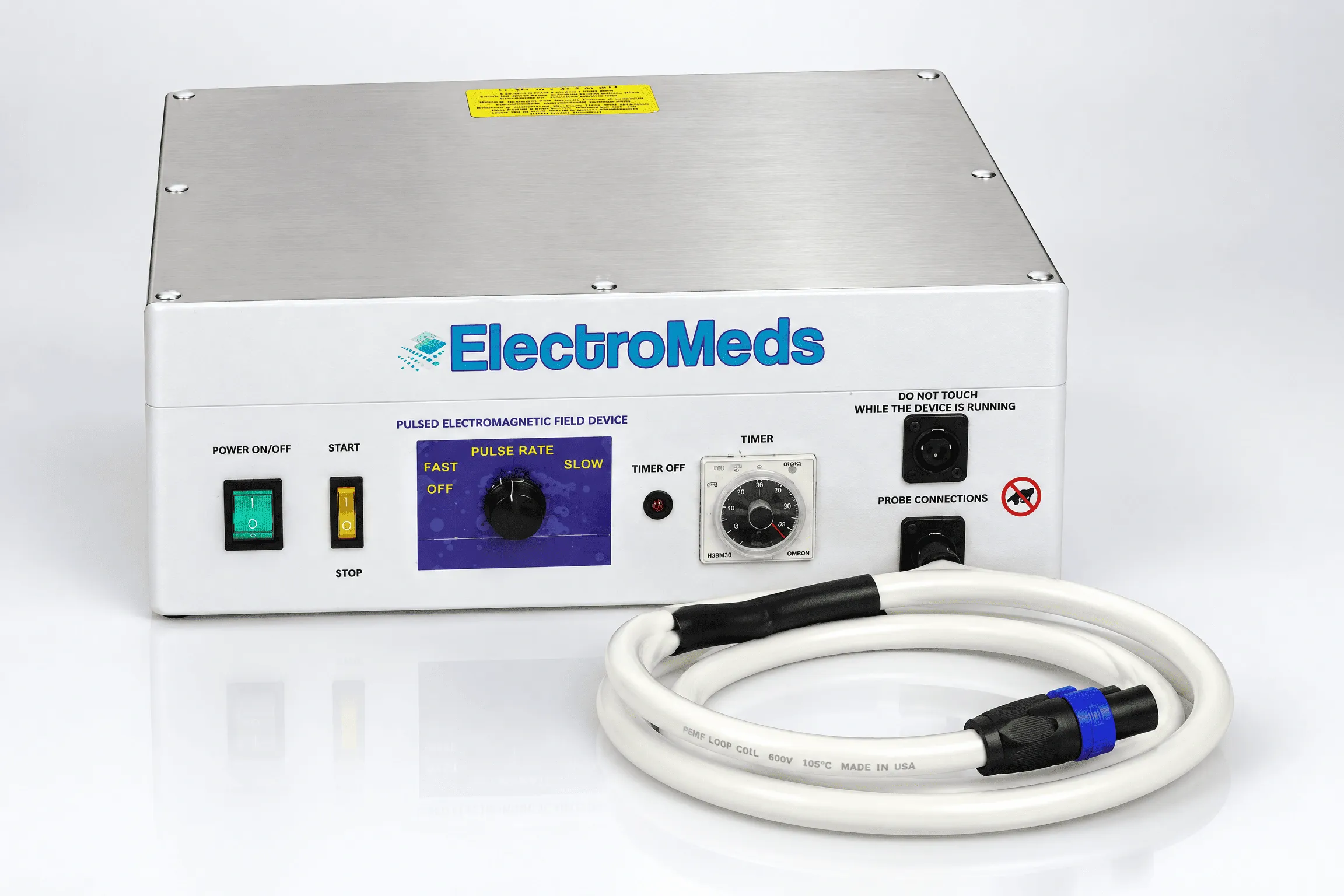
MegaPulse mobile, desktop and equine PEMF systems
Systems currently stocked at ElectroMeds.

ElectroMeds carries current in-stock devices across the portable, whole-mat, and high-intensity categories. Every product page shows the current price and package. Ask us to walk you through which system fits your situation before you check out.

Sedona Pro Complete Set

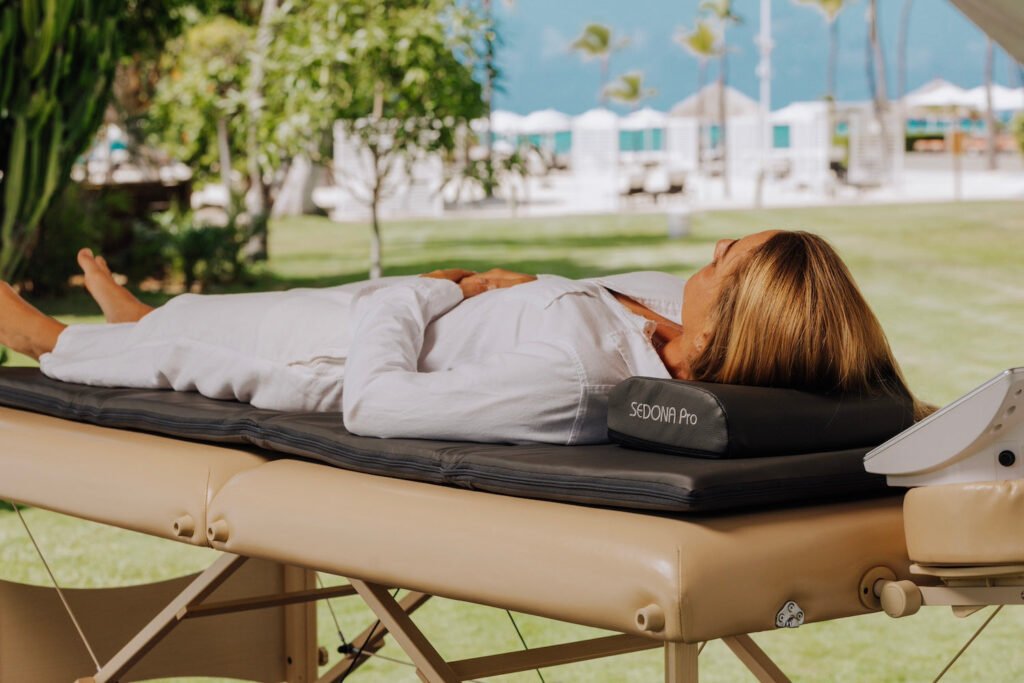
Person resting on a Sedona Pro PEMF mat
The Sedona Pro mat in use.

Current price from $5,900

A complete whole-mat system with mat and applicators, positioned for buyers who want a home-and-clinic-capable setup with the current configuration listed on the product page.

See Sedona Pro Complete Set details

MegaPulse (high-intensity)

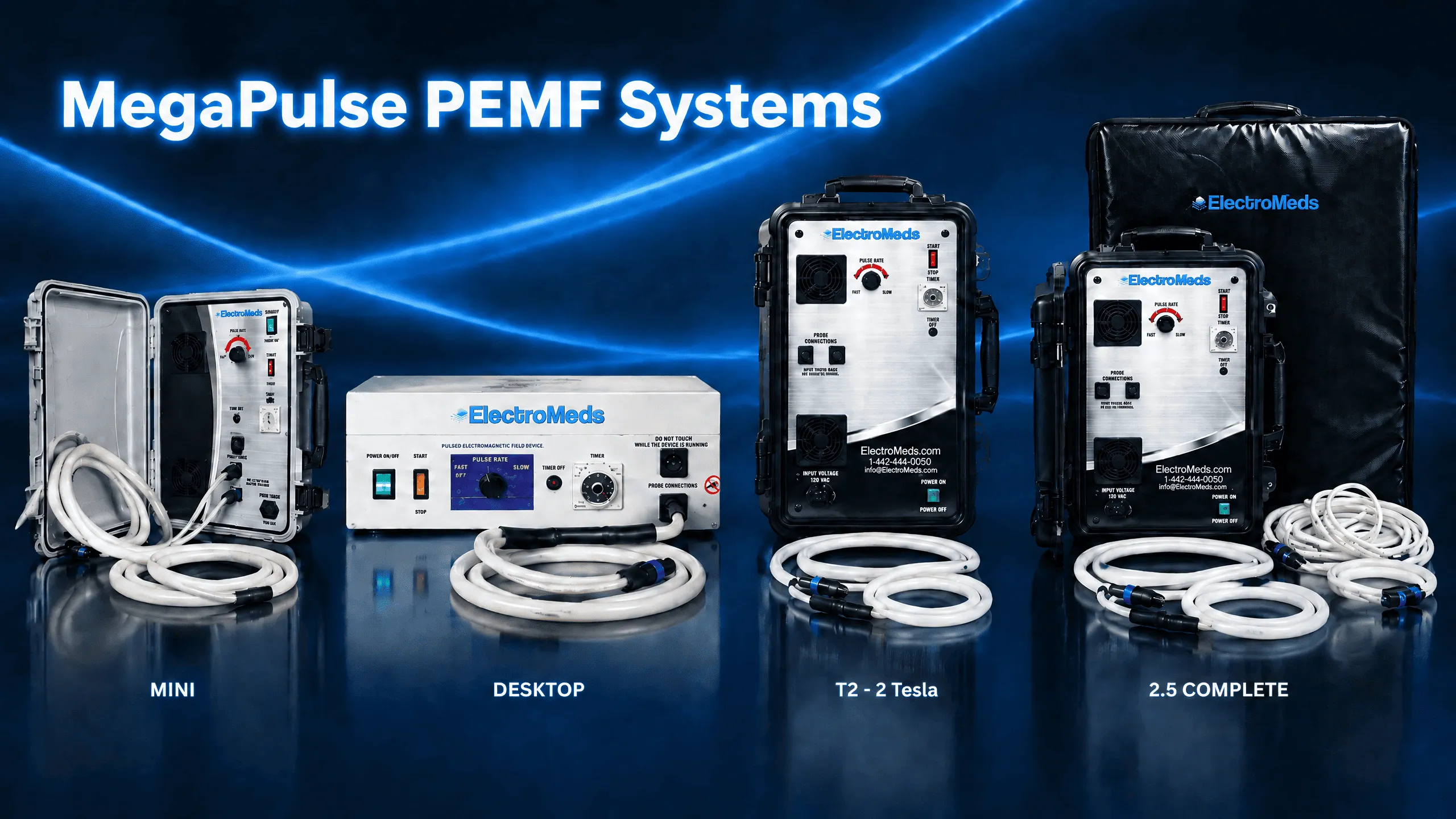
MegaPulse T2 2 Tesla desktop PEMF system
The MegaPulse T2 desktop system.

Professional applicator system

The MegaPulse family is the high-intensity end of our lineup — a professional system for chiropractors, veterinary practices, sports-post-workout care centers, and clinical use across a range of health goals. Configurations for human and equine use.

View the MegaPulse hub

Warranty is where PEMF brands separate

Most PEMF systems in this price range carry a two or three year warranty. One does not. Sedona offers an optional Extended Lifetime Warranty covering defects or malfunctions of the computer controller under normal use, with no time limit. It is $375 on the Sedona Pro, Pro Plus and Elite, and $1,375 on the SEDONA PEMF Chair. See the Sedona Extended Lifetime Warranty listing. As far as we are aware, no other PEMF manufacturer offers lifetime coverage at any price.

What the lifetime warranty does for applicators

The Extended Lifetime Warranty covers the computer controller. It does not cover wear and tear on the mat and pillow applicators — those are consumable parts, and no warranty covers them outright.

What it changes is what they cost to replace. Once the standard 2-year warranty has expired, a replacement mat or pillow applicator is $1,250 without the extended warranty and $250 with it. That is a $1,000 difference on a single applicator, against a one-time $375 — and applicators are the part of any PEMF system most likely to need replacing, because they are the part you lie on every day. If you already own a Sedona system with the Extended Lifetime Warranty, contact us with your serial number before ordering an applicator at list price, and we will route your warranty claim.

The catch worth knowing before you shop: it must be added at the time of purchase. It cannot be bought later, at any price, on any Sedona system. If you are comparing a Sedona against another brand on warranty, that decision has to be made at checkout rather than after you have lived with the device for a year.

Lifetime coverage applies to the controller electronics. It excludes normal wear on the mat and pillow applicators, and damage from misuse, accidents, alterations, or improper installation. Claims need proof of purchase and the serial number. Whatever brand you choose, get the warranty terms in writing before you pay, and confirm current pricing with the seller.

How to choose (step by step)

  1. Start with the goal, not the spec sheet. Sleep and post-workout care? Joint-specific work? Clinical use? The category you need falls out of the goal.
  2. Pick the category before the brand. A whole-mat system and a high-intensity system are different tools. Cross-shopping across categories is how buyers end up frustrated.
  3. Compare published specs, not marketing claims. Peak intensity, frequency range, waveform, and rise time should all be public.
  4. Price the complete kit. A “$4,000 system” can become a $6,500 system after the accessories your use case actually needs.
  5. Check warranty and service. A five-figure device that spends six weeks in a repair queue stops earning its keep.
  6. Talk to a human before you order. A ten-minute conversation with a knowledgeable dealer catches mismatches that no product page can.

Red flags when shopping

  • Unpublished specs. If the frequency range, intensity, and waveform are not on the product page or in the manual, you cannot verify what the device does.
  • “Supports” or “treats” specific diseases. These devices are not FDA-cleared for that. Legal and factual red flag.
  • MLM recruitment pressure. If the pitch is about signing up more sellers instead of the product, walk away.
  • “Special deal — but only if you buy today.” Legitimate capital equipment doesn’t need a countdown timer.
  • No US-based service. Overseas repair adds weeks to any warranty claim.
  • No published warranty length. Look for warranty terms in writing before you buy, not after.

Home use vs professional use

Two very different buyer profiles show up in this market, and they usually need different equipment.

Home users generally do best with a whole-mat system plus (optionally) a local applicator for targeted work. Prioritize: comfort, ease of daily use, preset variety, quiet operation, and the ability to run a session at home while watching TV or reading. Mats in the $2,000–$6,000 range serve this market well and support daily routines around sleep, post-workout care, and general health.

Clinics, chiropractors, veterinary practices, sports-post-workout care facilities, and equine practitioners generally need a high-intensity system. Sessions are shorter, throughput matters, and the device has to hold up to repeated daily use. Warranty length, service turnaround, and operator training programs matter as much as raw specs. Budget: $8,000–$22,000 depending on brand and configuration.

Between the two, some buyers land in a hybrid zone — a chiropractor who wants a mat for daily personal use and a certified system for occasional client work, or a serious home athlete who wants both broad and targeted capability. That’s a real profile, and it usually means owning more than one device.

Talk to us before you order

Call or text 442-444-0050, or use the ElectroMeds contact form. You will get practical guidance about the current lineup — without a discount pitch, without recruitment, and without steering you toward something that does not fit.

Frequently asked questions

What is this kind of device?

A pemf machine delivers pulsed electromagnetic fields to the body through an applicator — typically a mat, ring, or handheld unit. Sessions are non-invasive and drug-free.

How much does one cost?

Prices range from about $429 for a portable unit to $19,000+ for a professional high-intensity system. Whole-mat systems sit in the middle, typically $2,000–$8,000.

What’s best for home use?

There isn’t a single “best” — the right choice depends on your goal. Whole-mat systems are the most common home format. If you want targeted work on a specific area, a portable unit may fit better. Match the tool to the job before the brand.

Are these FDA-cleared?

A small number of devices carry specific FDA clearances (historically for skeletal areas-growth stimulation and related post-operative uses). Most products are sold as general-purpose devices and are not FDA-cleared to treat specific diseases.

What’s the difference between a low-intensity mat and a high-intensity system?

Low-intensity mats deliver a broad electromagnetic field across the body at gentle strength — typical of daily home use. High-intensity systems deliver a focused field at hundreds or thousands of Gauss into a smaller area — typical of clinical and sports-post-workout care use. Different tools for different jobs.

Can I try one before buying?

Some manufacturers offer rental or try-before-you-buy programs on higher-priced systems. For lower-cost portable units, most buyers commit outright. Call us to ask about current options.

What should I compare before buying?

Category, published specs (intensity, frequency, waveform), accessories included, warranty length, US-based service, and the vendor’s willingness to have a real conversation.

Can I talk to someone at ElectroMeds?

Yes. We offer direct pre-purchase support by phone, text, or contact form.

About this guide

Written by the ElectroMeds team in San Diego, California. ElectroMeds is a dealer founded in 2008 by Russ Guillemot. We sell the MegaPulse, Sedona Pro, MultiPulse, and StemPulse product families and speak with buyers directly by phone and email. This page is educational only. Consult your physician or veterinarian before starting any new therapy.

Related reading

PEMF Machine Categories: Portable, Full-Body, and High-Intensity

A PEMF machine falls into one of a few clear categories: a portable pemf device for spot use, a full-body PEMF mat for whole-torso sessions, or a high-intensity pulse pemf system for deeper field output. Selection depends on session goals, portability, budget, and accessory needs.

PEMF machine vs. MagnaWave, Pulse EQ, and Pulse PEMF

MagnaWave, Pulse EQ, and Pulse PEMF are three of the better-known brand families in the high-intensity pulse pemf segment. The ElectroMeds MegaPulse line is the equivalent house line and is priced within the same range.

Accessories that ship with a PEMF machine

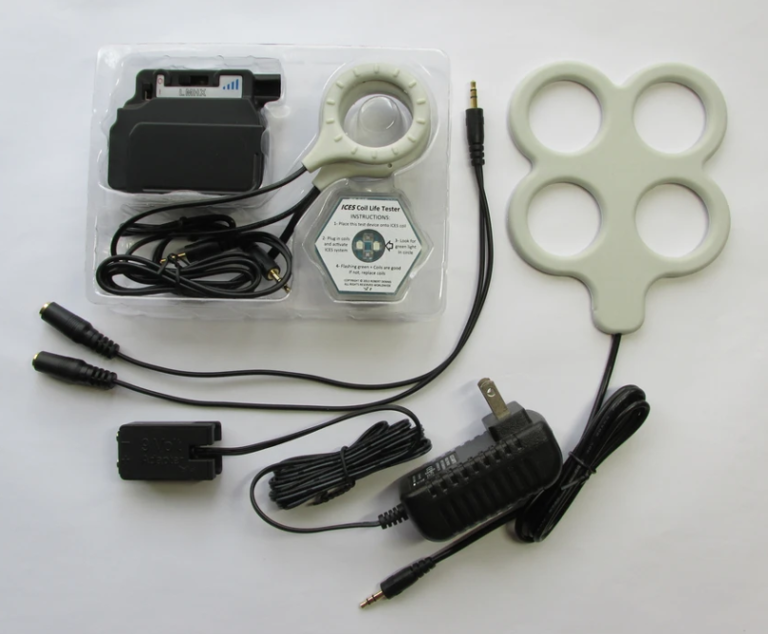
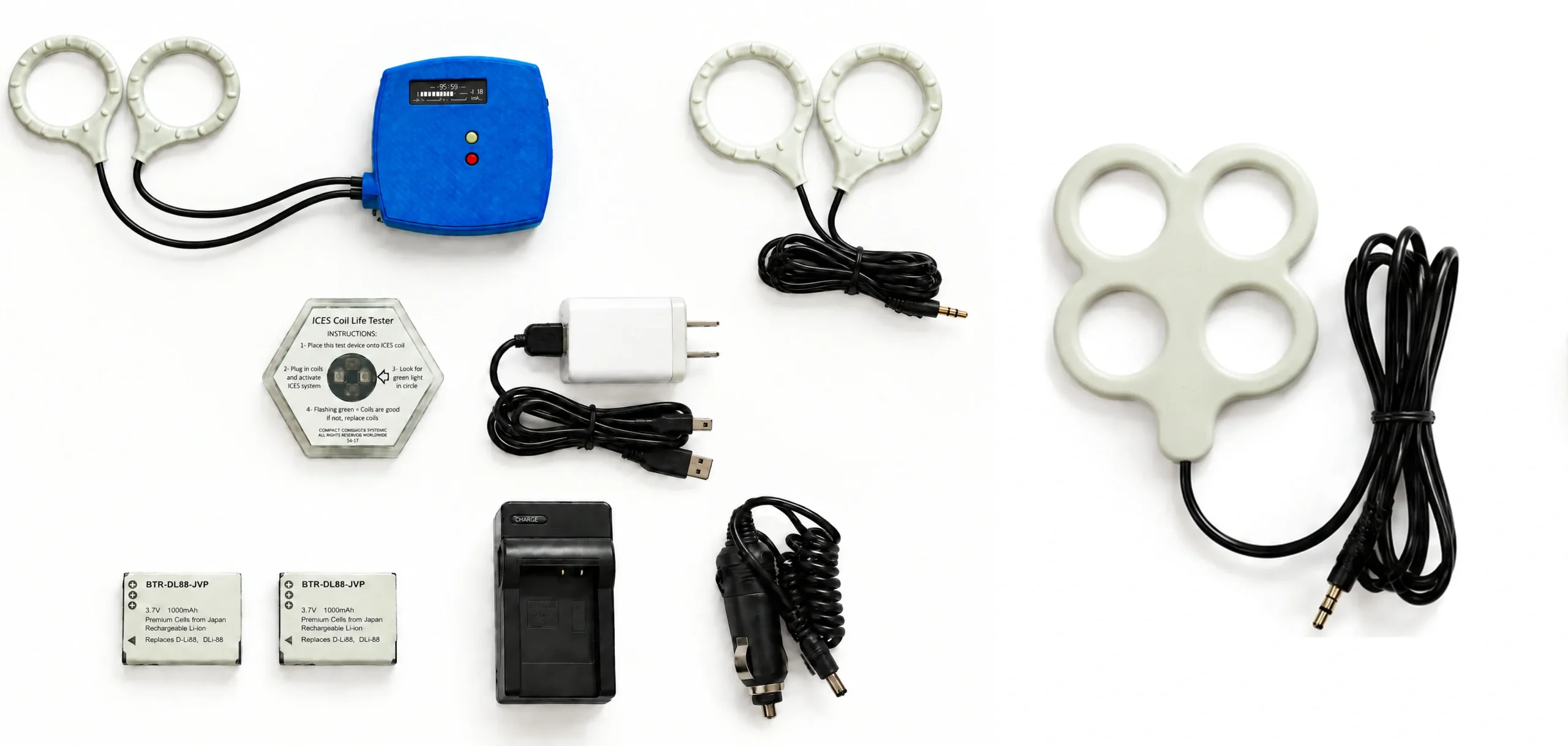
Most PEMF machine purchases include the control unit, one or more accessories (typically a mat or loop applicator), a carrying case, and a warranty card. Additional applicators, replacement coils, and travel cases are sold separately.

PEMF machine use in a clinic vs. at home

A PEMF clinic setup typically uses a high-intensity floor-standing unit with multiple applicators; a home setup usually uses a portable or full-body mat. Both share the same core technology.

Animal and equine PEMF machine options

Dedicated animal PEMF machines are available for equine and canine use — see the ElectroMeds MegaPulse Equine listing for the current professional-grade option.

PEMF Buyer Guide: Legacy Brands, IMRS, Bemer, Curatron, and What ElectroMeds Carries

Buyers researching PEMF often start with brand names they’ve heard from friends, chiropractors, or older marketing — brands like IMRS, iMRS 2000, Bemer, Bemer 3000, Curatron, MAS, Medithera, Magnetan, QRS Quantron, or Healy. Some are still sold; some legacy models have been discontinued or renamed. ElectroMeds does not carry every brand on the market. Since 2008 we have chosen a small, curated catalog rather than reselling everything. Here is how we think about the brands we don’t stock — and what we do.

Why our catalog is curated

Two criteria decide whether a PEMF brand is on our shelves. First, independent pricing and distribution: several well-known PEMF brands are sold only through multi-level distributor networks with fixed retail pricing set by the parent company. Distributors earn commissions on each sale and on downline sales, and that structure builds cost into the retail price. We chose not to participate in that model. Second, value per dollar of clinical spec: intensity range, waveform control, applicator quality, warranty, and long-term parts availability. Some brands price above what their published specs justify against non-MLM alternatives with comparable or better hardware.

None of that means those brands don’t work for the people who own them. It means we chose a different lane — direct-to-consumer pricing on independently manufactured devices, with the same or better specs at meaningfully lower cost.

iMRS, iMRS 2000, and iMRS successor models

The iMRS 2000 was a popular full-body PEMF mat in the 2000s and 2010s. That model was discontinued and replaced by newer iMRS-branded systems sold through a multi-level distribution network. We don’t carry the iMRS line. If you already own an iMRS system and it works for you, keep it — no reason to replace a device you’re happy with. For a fuller technical breakdown, see our iMRS 2000 review covering frequency, intensity, and alternatives.

Bemer and Bemer 3000

The Bemer 3000 is a legacy Bemer device replaced by the current Bemer Pro line. Bemer sells through a multi-level distributor structure with fixed retail pricing. We are not a Bemer distributor and don’t carry the Bemer line. The Bemer field is deliberately low-intensity and designed around microcirculation — a narrower design brief than most clinical PEMF systems. If a Bemer fits your specific use, it may be right for you. Read our BEMER Pro and BEMER 3000 engineering analysis for a detailed look at signal design and clinical trade-offs.

Curatron, MAS, Medithera, Magnetan, QRS Quantron, Healy, and other brands

Curatron (Israeli manufacturer, direct-order model), MAS and Medithera (European brands historically sold through distributor networks), Magnetan, QRS Quantron, and Healy are all brands buyers ask us about. We don’t carry any of them — some for distribution-model reasons, some for value-per-spec reasons, some simply because we chose to keep our catalog small. That doesn’t mean they’re bad devices. It means we’re not the right store for those specific systems.

If you’re actively comparing one of those against something in our catalog, contact us and we’ll give you a straight comparison — including telling you when another brand is genuinely a better fit for your use case.

Pre-owned and refurbished PEMF equipment

ElectroMeds sold pre-owned and refurbished PEMF equipment for many years — Bemer, Curatron, PMT-120, Parmeds MultiFlash, PEMF 4000, Centurion EZY, and others. We are no longer accepting pre-owned inventory. Every device in our current catalog is new from the manufacturer, with full manufacturer warranty. If you’re looking for used equipment, the private market (eBay, Craigslist, PEMF-owner forums) is where those transactions happen now.

What ElectroMeds carries today

Our current catalog covers three practical categories:

Prices, options, and full specifications are on each product page below. If you’re still comparing brands, the fastest way to a decision is a phone call — 442-444-0050 — where we can walk through your specific situation without a sales script.