
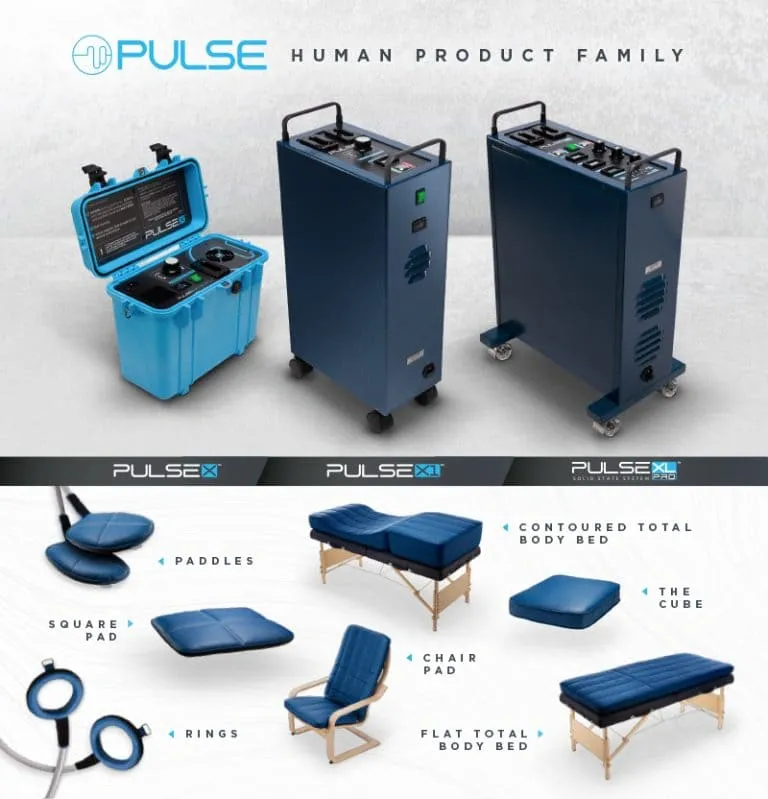
This comparison concerns Pulse PEMF equipment, including the Pulse XL Pro, rather than treatment centers or unrelated service providers. Keep the exact manufacturer and model in your comparison so the evidence answers the equipment question you actually have.
Professional high-output equipment comparison
Comparing high-output equipment for a clinic or an appropriately advised home setup? Evaluate MegaPulse against the exact XL Pro configuration being offered, with attention to controls, applicators, documentation, and ownership. A useful comparison starts with your requirements, not a claim that one number makes a device superior.
ElectroMeds sells MegaPulse and is not affiliated with the competing manufacturer. We recommend a documented, configuration-by-configuration comparison rather than treating an entire manufacturer’s catalogue as one machine. This page is a buying guide, not an individualized treatment recommendation.
PEMF systems: what is actually adjustable?
The manufacturer’s XL Pro description lists a 0–100% Magnetic Field Strength control, 19 repetition settings spanning 1.0–9.9 pulses per second, a timer, and the ability to power two accessories simultaneously. Confirm the current instructions and package offered to you rather than relying on an old brochure. The linked page also contains an expired promotional offer; use its technical description as a reference and request current model documentation, not its old package price.
Those controls are useful information, but a percentage setting is not a field-strength measurement in gauss. Equally, a peak gauss figure is not a complete description of the pulsed electromagnetic field. Ask for the applicator, measurement position, operating setting, waveform, and pulse duration from both suppliers.
What adjustment do you actually need, and why? If a proposed clinical application calls for particular parameters, ask the qualified professional advising you to identify the supporting evidence and device requirements. A wider adjustment range alone does not establish a better result.
Build one comparable specification sheet
Put the two quotations side by side and give each specification its own row. Record the controller revision, applicator, published output, pulse duration, repetition range, available adjustments, and measurement method. For a pulsed electromagnetic configuration, a blank measurement field is more useful than a number copied from a different accessory. Ask the supplier to complete the missing item or explain why the figures cannot be compared directly.
Keep the original documents with your notes. If one quotation describes a complete system and the other lists only a controller, mark that difference before comparing prices. Likewise, record whether an accessory is included, optional, or incompatible with the proposed configuration. This prevents an attractive headline figure from hiding a package that does not meet the requirement you started with.
What would make one offer clearly unsuitable? Decide that before the demonstration. It might be an attachment that cannot be positioned as required, insufficient operating documentation, an unresolved service question, or a transport arrangement that does not fit your space. A written requirement keeps the purchasing conversation focused on a practical decision instead of a contest over maximum output.
Compare technical documentation fairly
Compare like with like. Do not contrast a maximum measured at one location with an average or a reading taken elsewhere. Ask whether the documents describe the complete configuration, including the chosen applicator. A field value without measurement conditions should remain an unanswered question, not become a competitive claim.
Apply the same discipline to MegaPulse. The model guide helps organize configuration questions, while the high-output terminology guide explains which parameters to request. Obtain the current sheet for the revision being supplied.
A device described as high-output or professional does not automatically match the equipment in a published study. Nor should a claim about how far a field can penetrate be treated as proof of a therapeutic effect at that depth. Separate a physical measurement from a clinical conclusion.
Applicators and body coverage
Ask which components are included and which are optional. Compare their dimensions, permitted connections, cleaning requirements, and practical positioning. Broader coverage of the body is not necessarily the same requirement as a focused arrangement for one area.
The manufacturer’s package description explains several focused and broader-format components. An accessory catalogue is a starting point for questions, not proof that every combination is permitted. Request the actual operating instructions before planning a shared setup.
For MegaPulse, review the T2 Desktop or another relevant configuration against the same needs. Would a different shape solve the problem, or is the real issue storage, transport, or operator access? Avoid buying extra components to compensate for an unanswered setup question.
Pulsed electromagnetic technology: evidence first
Searches for electromagnetic equipment often mix equipment comparisons with claims about chronic pain, recovery, and general health. Those are not interchangeable buying criteria. If you are considering pulsed electromagnetic field therapy for a medical concern, get the concern assessed before deciding which equipment to purchase.
Ask whether the cited evidence uses the same device, settings, population, and outcome. A study of bone-related treatment does not automatically establish pain relief for a different condition. A testimonial about improved comfort cannot substitute for evidence of sustained benefit.
This technology should not be marketed as a guaranteed replacement for necessary care. If the proposed use is an adjunct to a treatment plan, ask how its contribution would be evaluated and what uncertainty remains. A higher output, a stronger sensation, or a premium package does not answer that question.
Review the technology without transferring research claims
For pulsed electromagnetic equipment, separate three questions: what the hardware generates, what the research actually tested, and what a supplier is offering. The answers may come from different documents. A specification describes an operating parameter; a study describes a defined experiment; an invoice describes a purchase. None should silently substitute for the others when you compare therapeutic claims.
Request the full publication when a seller cites research. Identify the study’s signal, attachment, comparison group, population, follow-up period, and reported outcome. Ask whether the proposed configuration matches those details or only shares a broad technology label. If there is a mismatch, have the clinician explain whether the research is relevant before treating it as support for the purchase.
Non-invasive therapies are not one interchangeable category. If your shortlist includes compression equipment, electrical stimulation, or another modality alongside pulsed electromagnetic equipment, ask the clinician to explain why each belongs in the discussion. Do not transfer evidence, instructions, or restrictions from one modality to another. The purpose is to compare appropriate treatment options, not to assume that every non-invasive approach has the same role.
A useful research conversation also asks what remains uncertain. Were the reported changes meaningful for the outcome being discussed, and were limitations or adverse events described? Ask how the evidence would influence your decision, rather than collecting impressive-sounding study titles. When the therapeutic rationale is unclear, resolve it before selecting optional hardware or agreeing to a larger package.
Questions for your healthcare provider
What health problem is being addressed, and what assessment is needed first? Ask your doctor or other appropriate clinician whether the proposed modality belongs in the plan. Bring the current instructions and contraindications rather than only a sales page.
For chronic pain or another ongoing concern, discuss the existing treatment, alternatives, and signs that should prompt review. Do not change medication or delay necessary care because you are evaluating treatment options. A buying guide cannot decide whether a particular person is a suitable candidate.
Also distinguish the proposed modality from other treatment options that share similar language. A general reference to electromagnetic therapy is not enough to identify the technology, intended use, or evidence. Ask for precise terms and avoid transferring claims between unrelated devices.
Choosing equipment for professional use
For a clinical purchasing file, collect the instructions, intended-use documentation, technical specifications, and applicable regulatory evidence. Record the revision and date so later questions refer to the correct configuration. Ask who will keep the file current when staff or components change.
Registration is not clearance or approval. The FDA explains this distinction. Do not infer a permitted medical treatment from a registration statement or from the word clinical in a product description.
A clinic should also resolve operator responsibilities, training, screening, and record keeping. If a patient asks what the equipment is expected to do, the answer should reflect the evidence and permitted scope, not a generic claim that the technology improves every aspect of health.
Plan a demonstration around your actual room
Before a demonstration, provide the supplier with the intended setting and practical constraints. For portable PEMF equipment, ask about packed size, cable storage, lifting, and the permitted power arrangement. For a fixed installation, ask about access to controls, positioning the attachments, and keeping walkways clear. Do not infer portability or simultaneous-use capability from a product photograph.
Have the demonstrator explain the controls and show the permitted connections using the current instructions. Can the person who will operate the equipment repeat the setup correctly? What happens when an accessory is exchanged or the unit is moved? These questions evaluate the usability of the proposed systems without making the demonstration a test of a medical outcome.
If two operators will share responsibility, ask both to review the arrangement. One may notice a storage or handling problem that the other missed. Record the unresolved questions and ask for a written response rather than accepting “you will get used to it.” A demonstration should reduce uncertainty about the equipment, not create pressure to decide before you understand it.
Ownership, training, and total cost
Request current quotations for equivalent configurations. Compare the controller, permitted components, delivery, payment conditions, and support arrangements. Old package prices or third-party estimates should not be presented as today’s offer.
Ask for the warranty terms that actually govern each order. Which parts are covered, what exclusions apply, and who pays transport for a repair? Do not assume a particular replacement cost, service interval, loan unit, or lifetime support promise unless it is documented.
Training is another purchase requirement, not an afterthought. Ask what is included for the initial operator and additional staff, which resources remain accessible, and how questions are handled after delivery. Treat education as preparation for responsible operation, not permission to offer any treatment or make any health claim.
The equipment cost guide can help structure the budget. Review the applicable ElectroMeds terms before accepting a MegaPulse quotation. Compare total commitment without assuming that future appointments will cover it.
Define training, service, and delivery responsibilities
Ask the seller to distinguish equipment instruction from clinical education. Who explains the operating manual, who answers technical questions, and who advises on individual suitability? If additional training is offered, request its scope, format, and cost. Training in controls does not by itself establish competence to select therapeutic interventions or expand a professional’s permitted scope of practice.
For a practice comparing therapy systems, include downtime in the discussion without assuming a particular failure rate. Who diagnoses a fault, where is service performed, and how are shipping responsibilities allocated? Ask whether any loan equipment is actually included in the agreement. Do not count a verbal possibility as a guaranteed service benefit.
At delivery, compare the shipment with the agreed inclusion list and keep the relevant records together. Ask how to report damage or missing components and which checks are required before operation. Keep serial numbers, manuals, warranty documents, and support contacts accessible to the responsible operator. Good documentation makes later questions specific rather than dependent on someone’s memory of the sales conversation.
Equipment at home or in a shared room
Where will the equipment sit, and who will prepare the area? Check storage, electrical requirements, cable routing, access to controls, and the process for putting components away. A professional configuration is not automatically a convenient home arrangement.
If the plan involves moving between locations, request packed dimensions and handling instructions. Do not infer battery capability or outdoor suitability from wheels or a carry case. Ask how the units are designed to be transported and stored.
Consider the practical burden as well as the intended benefit. Would you still follow the agreed routine if preparation took more effort than expected? It is better to identify that constraint before ordering than to assume that a more expensive package will resolve it.
A responsible comparison also includes what happens after delivery. Confirm who accepts the shipment, checks the inclusion list, keeps the instructions, and contacts the supplier if anything is missing. Do not put equipment into service before completing the checks required by their instructions.
For a shared professional setting, ask how staff will record the selected configuration and report concerns. An operator should not have to guess which manual applies or rely on another person’s memory of a demonstration. Clear records make future questions about the equipment more specific and keep equipment decisions distinct from a clinician’s treatment decisions.
For home ownership, consider the same questions on a smaller scale. Who will help if the controls are unclear, where will the documentation be kept, and how will you obtain an answer about permitted use? A simple plan can matter more than another optional component.
If you are not ready to purchase, identify the unanswered question rather than assuming you need more sales material. It may concern health, a proposed treatment, or a practical detail about the device. Bring each question to the appropriate person. That approach helps avoid buying on a promise that no documented configuration can establish.
Decide what would justify the purchase
Imagine that the proposed package has arrived. Which practical problem will it have solved: a required applicator format, a more manageable setup, documented operating parameters, or dependable access to technical support? If the answer is only that it looks more powerful, return to the requirement. High-output pulsed electromagnetic equipment should be purchased against a defined need, not an assumption of a superior therapeutic result.
Compare the complete commitment, including agreed accessories, shipping, training, and applicable service terms. If you are budgeting for a practice, keep any assumptions about future utilization separate from the supplier’s quote. Do not treat expected bookings or a suggested session price as guaranteed revenue. Ask whether the purchase would still make sense if adoption were slower than you expect.
It is reasonable to postpone a decision while a key question remains unanswered. Ask each supplier for the same missing information and give yourself a clear way to compare the responses. Choose the configuration whose documented features fit the requirement, or decide that neither offer is ready. A careful comparison can end with a purchase, a narrower shortlist, or no purchase at all.
Frequently asked questions
Is MegaPulse necessarily more powerful than the XL Pro?
This guide makes no blanket ranking. Comparable measurements for the exact configurations are required, and greater output does not establish greater clinical benefit.
Does a percentage control mean the output is undocumented?
No. A control label describes an adjustment, not the complete technical documentation. Request field measurements and operating conditions from the supplier before reaching a conclusion.
Can equipment replace a pain-management plan?
Do not replace or delay prescribed care based on a product comparison. Discuss pain management and any proposed adjunct with the qualified professional responsible for your health.
Which configuration should I shortlist first?
Identify the intended setting, permitted applicator arrangement, and required documentation. Compare one package from each supplier before expanding the shortlist.
Turn the comparison into a clear decision
What unresolved fact would change your choice: the operating instructions, included components, support, or complete cost? Contact ElectroMeds with that question and the intended setting. We can help clarify the proposed MegaPulse configuration without assuming a health outcome.
Use the professional comparison checklist for a broader review. Read safety information and contraindications alongside the current instructions. This page does not prescribe settings, duration, or a treatment schedule.